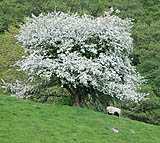
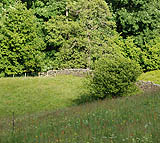
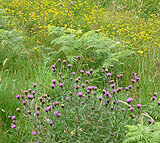
The farm has succesfully entered Higher Level Stewardship and has established a programme of outreach and educational access to the countryside - the Aelred Grange Project - www.aelredsgrange.org Biodiversity on the land is protected through the use of only minimal spot spraying with cutting or hand pulling of weeds used as the preferred method to control weeds . The bird diversity is considerable, with English grey-legged partridges, woodcock and snipe as well as lapwings, curlews and oyster catchers. Skylarks are many and a long-eared owl hunts voles by day in the reed moorlands. The river bank of Stean Beck has a considerable diversity of wild flowers, from primroses, wood anemones and wild violets in late spring to many different species in June and July. Blue bells on the hill sides mark the areas of ancient woodland long gone. Some communities of hare bells are starting as the meadows and pastures begin to recover from earlier times when farmers routinely used herbicides and synthetic NPK fertilizers. Whilst I do not agree with organic livestock farming, given the importance of animal welfare and the risks associated with non-use of modern veterinary medicines, vaccinations and pest protectants, I am committed to maintaining the land in a holistic way with minimal applications of chemicals. If thistles are pulled up - they tend not to return! Many areas on the farm are fenced to allow wild flower diversity and several areas are maintained as wetland both for plant biodiversity but also for bird habitats, particularly snipe. My aim is to keep sheep and all the other lives of the natural world coming together beneficially and thriving. |
biodiversity The Herdwicks are kept on a variety of meadows, from the banks of Stean beck to more upland pastures next to the moorlands. Their grazing is diverse- with mixed grasses and flowers and usually we manage to make home-produced hay for the winter. |
||